Compass Surgical partners with the MacMurray Centre to provide seamless gastroenterology and surgical care, offering patients comprehensive treatment from diagnosis through to surgery in one trusted location.
This article explains what gallstones are, why they form, and the symptoms they can cause. It also helps patients understand when gallbladder pain may need specialist assessment.
This article explains what gallbladder polyps are and why most are harmless. It also outlines when monitoring or surgery may be recommended based on size, symptoms and risk factors.
This article explains keyhole gallbladder removal, also called laparoscopic cholecystectomy. It describes what happens before, during and after the operation, and why keyhole surgery is preferred for most patients.
This article explains the recognised risks and benefits of gallbladder removal. It helps patients understand common side effects, uncommon complications and the safety steps used to reduce risk.
This article explains what to expect after gallbladder removal, including pain, diet, activity, driving and return to normal routines. It gives practical guidance on recovery and when to seek medical advice.
This article explains what a hernia is, why it happens and the common symptoms patients may notice. It also outlines when a hernia should be assessed by a surgeon.
This article explains when hernia surgery may be recommended and when observation may be reasonable. It helps patients understand how symptoms, hernia type, lifestyle and overall health influence the decision.
This article explains the main options for hernia repair, including open, laparoscopic and robotic approaches. It helps patients understand how surgeons choose the safest and most appropriate repair for each person.
This article explains the role of mesh in modern hernia surgery and why it is commonly used. It addresses common concerns about mesh and explains how careful patient selection and technique help reduce risk.
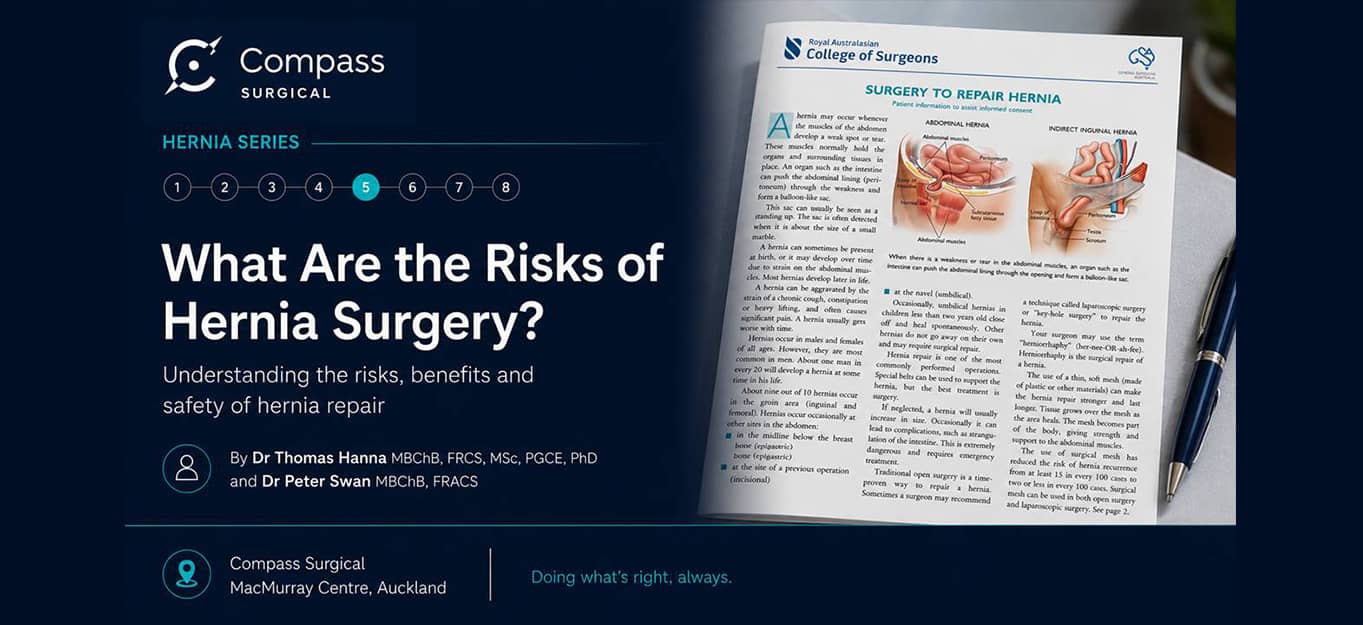
This article explains the recognised risks and benefits of hernia repair. It covers common recovery issues, less common complications and how surgeons work to make hernia surgery as safe as possible.
This article explains the patient journey on the day of hernia surgery, from admission and anaesthetic through to recovery and discharge. It helps patients know what to expect and how to prepare.
This article explains recovery after hernia repair, including pain control, wound care, walking, exercise, lifting, driving and return to work. It gives practical guidance on what is normal and when to ask for help.
This article explains what patients can expect in the months and years after hernia repair. It covers recurrence risk, ongoing comfort, return to activity and the importance of long-term follow-up where needed.
This article explains common skin lumps such as cysts, lipomas and other benign lumps. It also outlines warning signs that should prompt medical assessment.
This article explains how skin lumps and bumps are assessed through history, examination and, when needed, ultrasound or biopsy. It helps patients understand why accurate diagnosis matters before deciding on treatment.
This article explains when removal of a lump or bump may be recommended and when observation may be appropriate. It covers symptoms, growth, diagnosis, reassurance and cosmetic or practical concerns.
This article explains what to expect during lump and bump removal, including local anaesthetic, the procedure itself and wound closure. It helps patients feel prepared for a minor surgical appointment.
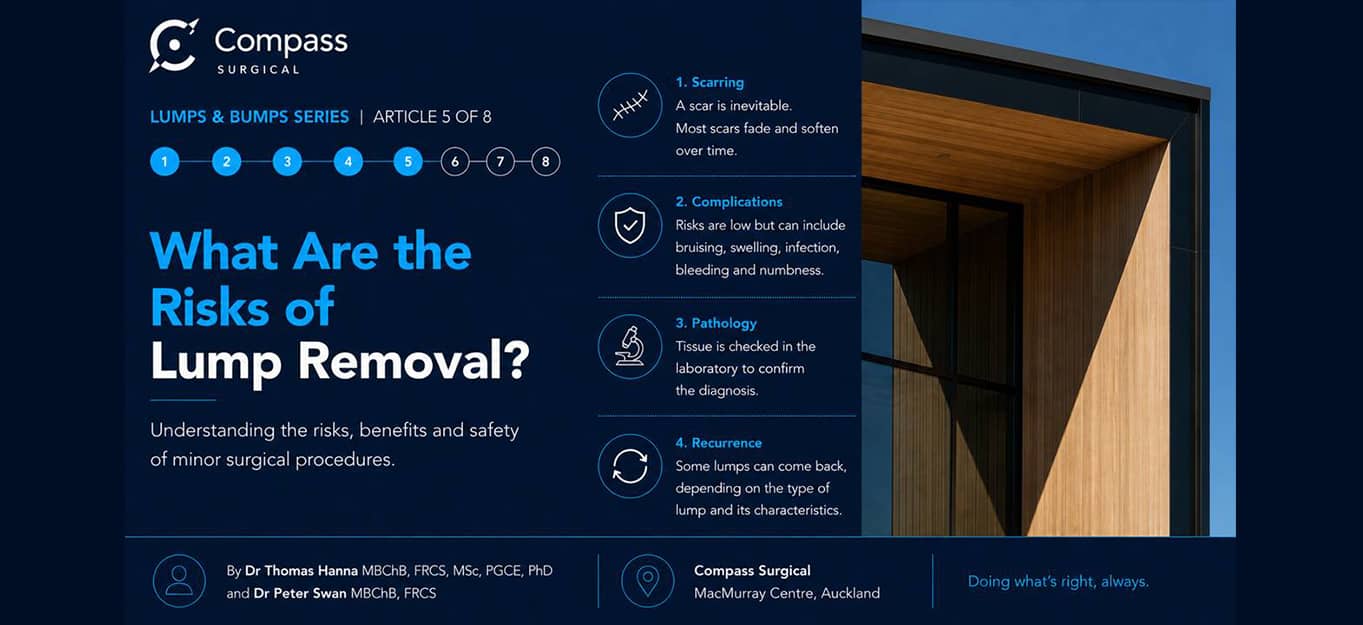
This article explains the risks and benefits of minor lump removal surgery. It covers bleeding, infection, scarring, recurrence, wound healing and how careful technique helps reduce complications.
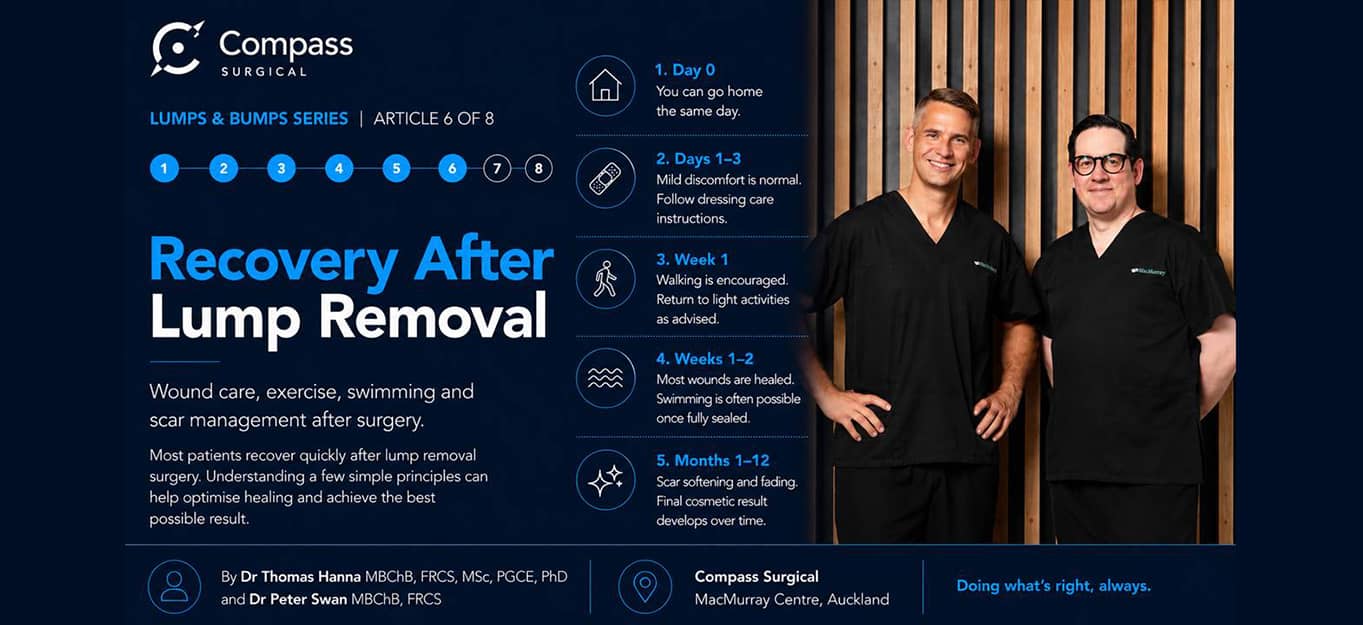
This article explains recovery after lump removal, including wound care, dressings, exercise, swimming and scar management. It gives practical advice on healing and when to contact the surgical team.
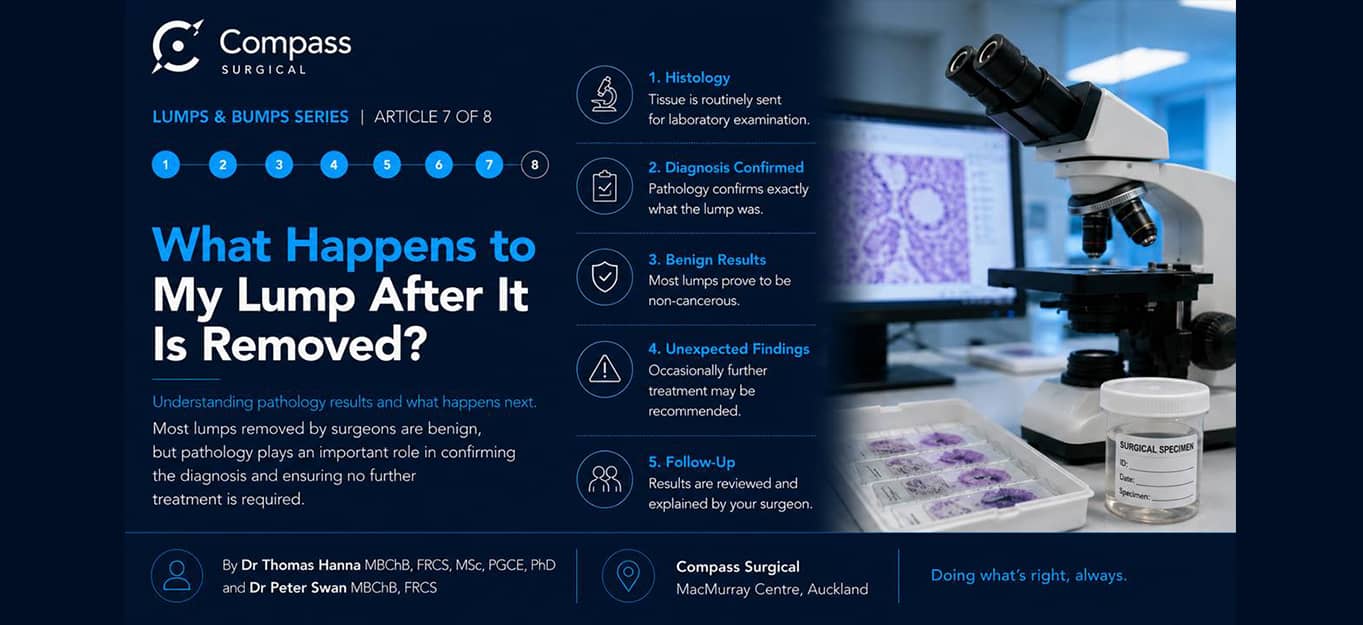
This article explains what happens after a lump is removed, including pathology testing and how results are reviewed. It helps patients understand why laboratory analysis is often an important part of safe care.
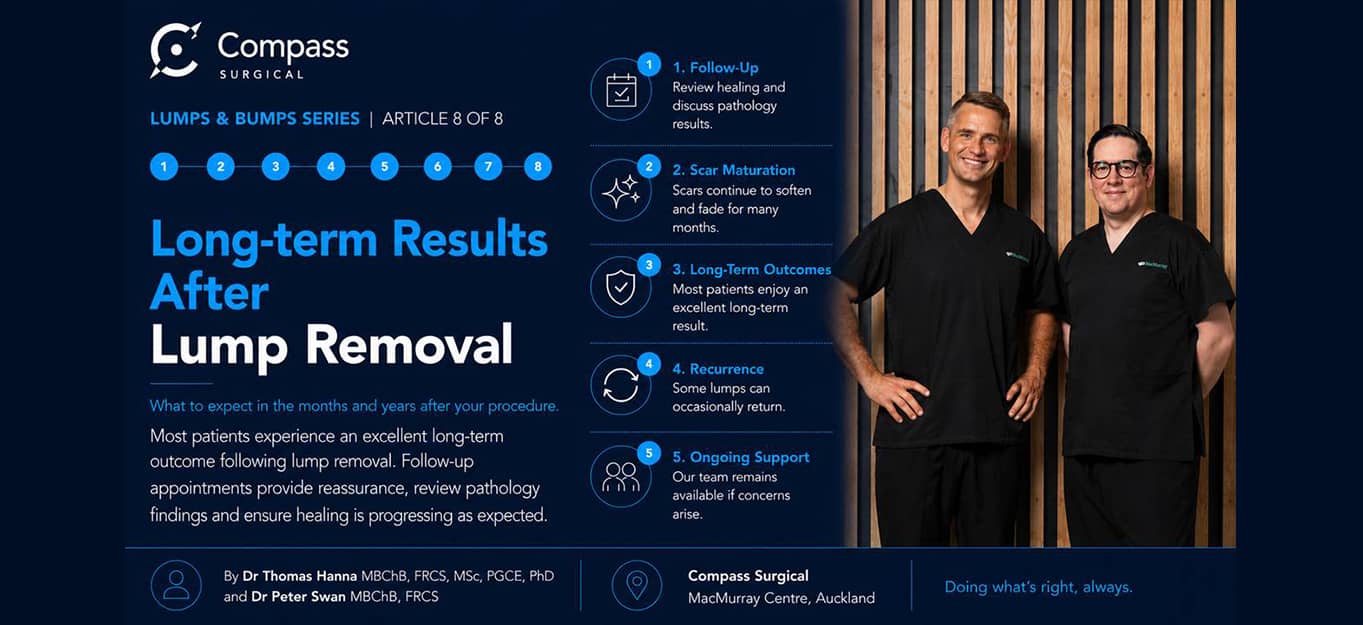
This article explains what to expect in the months and years after lump removal. It covers scar maturation, recurrence, ongoing symptoms and when further review may be needed.
© 2026 Compass Surgical All Rights Reserved | Privacy Policy | Terms & Conditions | Web Design by Virtual Innovation